AI and travel: ChatGPT as my professor in Japan
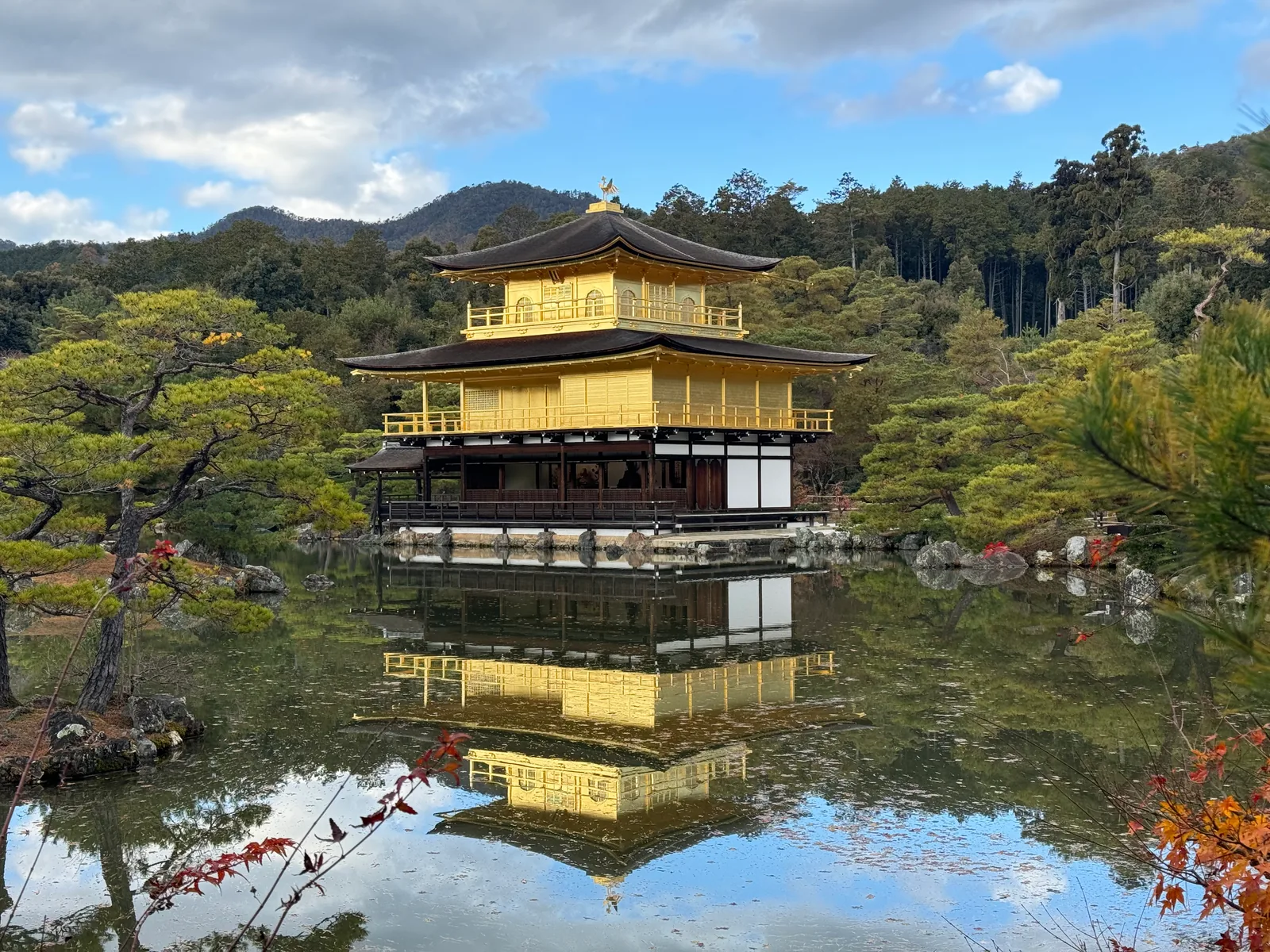
Kyoto, Kinkaku-ji, December 16, 2024
All my life I have been the curious type.
Question on question would go ignored.
Adults grew weary, their patience worn thin,
Treating my wonder like some sort of sin.
The experiment
From December 9 to 24, 2024, I traveled through Japan with an unusual companion. Instead of relying only on Google to satisfy my curiosity, I used ChatGPT as a kind of personal professor, asking the questions that came up naturally while visiting temples, riding trains and watching the rhythm of each city.
A search engine struggles with specific, context-driven questions. So at night, back at the hotel, I reflected on the day and turned to ChatGPT for explanations, comparisons and background. Over two weeks that added up to 35 questions, from etiquette to economics to 19th-century politics.
The result was an enlightening way to travel. It was also a useful test of what today’s AI does well, and where it still needs a skeptical user.
Manners you notice on the first day
The first questions were the obvious ones for a visitor. Almost nobody eats while walking in Japan, and public trash bins are rare. Can you eat in public, and if so, why do people avoid it?
The answer was practical and, as far as I could check on the street, accurate. Eating is fine in parks, at festivals, in the seating areas of convenience stores and on the Shinkansen, where buying a bento box for the journey is part of the experience. It is frowned upon on commuter trains and while walking through crowds. The reasons go beyond hygiene: shared space is treated as shared, you carry your own trash home, and the idea of omoiyari, being mindful of how your actions affect others, shapes a lot of everyday behavior.
The same pattern showed up at temples and shrines. Most Japanese people do not describe themselves as religious, yet they bow and clap at shrines as a matter of course. Shinto and Buddhism coexist rather than compete, and the rituals work more as custom than as statements of faith.
A country without pickpockets
Tokyo feels remarkably safe, so I asked why pickpocketing is so rare. ChatGPT produced a long list: shame and social pressure, low inequality, a visible and trusted police force, a strong lost-and-found culture, surveillance and social stability.
Every item is plausible. That is exactly the problem with this kind of answer. As an economist, I wanted to know which factors matter most, and a list of ten plausible causes does not tell you that. AI is very good at producing a complete-looking answer. It is much weaker at weighing evidence, unless you explicitly ask it to.
Tokyo versus Kyoto, and the value of pushing back
The most interesting thread started with a simple question about the cultural differences between Tokyo and Kyoto. Kyoto was the imperial capital for more than a thousand years, from 794 to 1868, and it built its identity around the court, temples and refinement. Tokyo, formerly Edo, became the seat of the Tokugawa shogunate in 1603 and grew as a city of commerce, administration and later modernization.
From there I pushed further. Which other countries have a similar pair of cities? How do such pairs compare on GDP per capita, inequality and happiness? Is GDP even a reasonable proxy for happiness, and which data would be granular enough to compare cities?
Then I asked a simple one: how many tourists do Tokyo and Kyoto receive each year? The first answer compared Tokyo’s international visitors with Kyoto’s total visitors, domestic and international combined. I asked for an apples-to-apples comparison. The second answer fixed that for international visitors, but when I asked for domestic visitors, Kyoto’s 2019 figure jumped from 53 million total visitors in the first answer to 88 million domestic visitors in the third. Both numbers cannot be right. Several of the cited sources were also low-quality aggregator sites rather than official statistics.
The same happened elsewhere. ChatGPT’s table of foreign arrivals in Japan put 2023 at 21.1 million. The Japan National Tourism Organization’s official figure is about 25 million, and 2024 went on to set a record of almost 37 million.
None of this made the experiment less valuable. It made the lesson clearer: the answers improved every time I challenged a definition or asked for like-for-like data, and they were least reliable exactly where they sounded most precise.
Following the thread of history
Where ChatGPT really shone was in chains of follow-up questions, the kind a patient teacher would answer. One evening started with England’s role in the opium trade and the Meiji Restoration and ended seven questions later somewhere I never expected:
- Was the restoration peaceful? Not entirely: it came with a civil war, the Boshin War of 1868 and 1869.
- What happened to the samurai? Before 1868 there were close to two million people in samurai households, around 6% of the population. Within a decade their rice stipends were converted into government bonds and, in 1876, the Haitōrei edict banned them from carrying swords in public.
- If the emperor existed under the Tokugawa, why did he have no power, and why did the Satsuma and Chōshū domains decide to back him against the shogunate?
Another evening, after walking through Tokyo, I asked how much of the city was destroyed in World War II. The answer led to the firebombing of March 9 and 10, 1945, when around 300 B-29 bombers set the wooden neighborhoods of eastern Tokyo on fire. Estimates of the dead range from 80,000 to 100,000 in a single night, making it the deadliest single air raid in history. Standing in a rebuilt city that shows almost no trace of it, that number stays with you.
What worked, and what did not
What worked:
- Context questions. “Why do people do this?” is where AI beats a search engine by far.
- Follow-ups. Being able to ask “and then what happened?” six times in a row turned tourist curiosity into genuine understanding.
- A routine. Asking at night, after the day’s experiences, gave the questions a purpose and the answers a place to land.
What did not:
- Numbers. Statistics were the weakest part: inconsistent between answers, sometimes outdated, and often backed by weak sources.
- Lists instead of judgment. Many answers were long, generic lists of plausible factors with no sense of which ones matter.
- Overconfidence. Precise-sounding details came with the same confidence whether they were right or not.
How I would do it next time
I would do it again, with a few rules:
- Use AI for the “why”, and check the “how many” against official sources.
- Define the comparison upfront: same year, same definition, same units.
- Ask it to rank causes and say how confident it is, not just to list them.
- Ask for primary sources, and treat an answer without them as a starting point, not a fact.
Used this way, an AI assistant is a remarkable travel companion. Just not one you should believe without asking a second question.
This essay replaces the original two-part post from December 2024, which published the full transcript of the conversations. Revised in September 2026.